
Beating Fuel Price Hikes in Dubai: Smart Driving & Fuel Station Navigation
Fuel prices in the UAE are adjusted monthly based on global market fluctuations. For active motorists, daily commuters, and businesses managing fleet logistics, these price changes directly affect monthly operational budgets. Adopting smart driving practices and choosing fuel-efficient vehicles are the most effective ways to maintain control over your transportation costs.
Quick Answer: How to Save on Fuel Costs in Dubai?
To combat fuel price hikes, rent highly efficient economy rental cars, maintain smooth acceleration patterns on the highway, ensure proper tire pressure, and use navigation apps to locate nearby fueling stations (ADNOC, ENOC) to avoid extra mileage.
Selecting the Right Vehicle for Optimal Efficiency
Your single biggest defense against rising fuel expenses is the vehicle you choose to drive. If you don't require a large vehicle for family travel, choosing a compact model or an advanced crossover car rental equipped with a modern, high-efficiency engine ensures you enjoy maximum mileage per liter. This allows you to navigate your daily urban routes with minimal refueling stops.
Understanding UAE Fuel Stations: Terminology & Networks
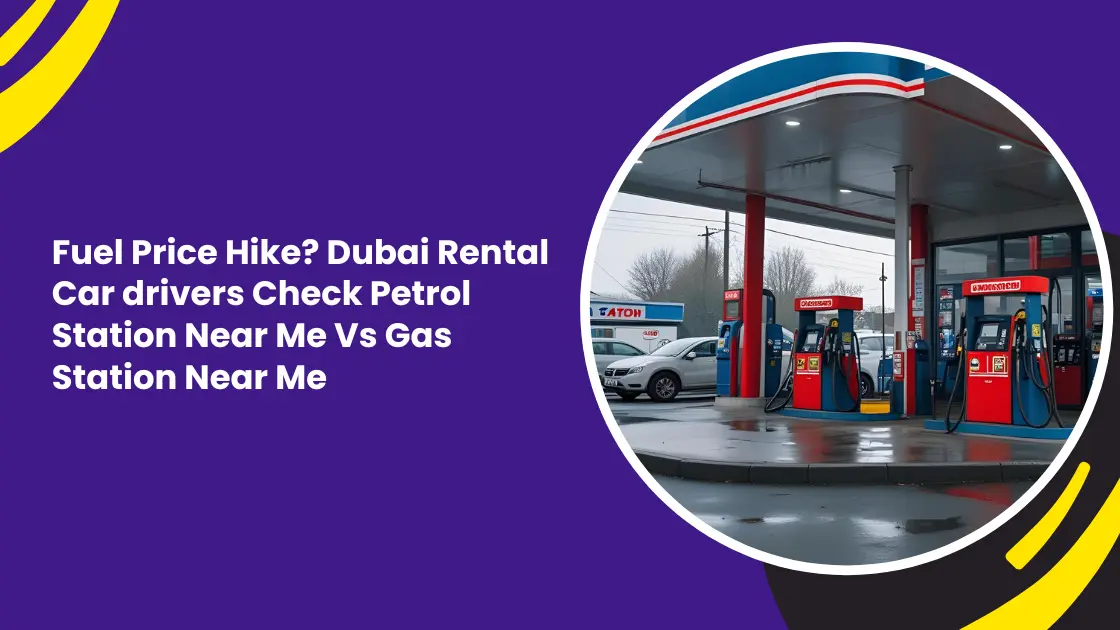
If you are an international traveler navigating the UAE, you might find yourself searching your maps for a "gas station near me". In the UAE and British English context, these are uniformly referred to as a "petrol station". The main fueling networks across Dubai and the broader UAE are ENOC (Emirates National Oil Company), EPPCO, and ADNOC (Abu Dhabi National Oil Company). All networks provide premium Special 95 and Super 98 fuel options at uniform, government-regulated prices across all emirates.
Strategic Tips to Maximize Every Liter
- Maintain Gentle Acceleration: Avoid aggressive stop-and-go driving patterns on busy city streets. Rapid acceleration significantly spikes fuel usage.
- Optimize Air Conditioning Use: Park in shaded areas or covered mall basements whenever possible to reduce the heavy cooling load placed on the engine when restarting.
- Consider Long-Term Rental Terms: Upgrading to a modern, meticulously maintained vehicle via a monthly car rental in Dubai ensures your engine operates at peak performance, maximizing every single liter of fuel.
Comparison: Fuel Efficiency Across Fleet Tiers
- Economy Hatchbacks: High efficiency (approx. 15-20 km/liter). Perfect for high-density daily city commutes.
- Compact Crossovers: Moderate-to-high efficiency (approx. 12-16 km/liter). Offers extra space with great economy.
- Full-Size SUVs: Lower efficiency (approx. 8-11 km/liter). Best reserved for family trips and heavy passenger requirements.
Frequently Asked Questions (FAQs)
Which fuel type should I use for my rented car?
The majority of standard rental vehicles run perfectly on Special 95. Always verify the exact fuel requirements with your provider during a daily rent a car dubai handover to prevent engine damage.
Are petrol prices different between Dubai and Abu Dhabi?
No, fuel prices are strictly regulated by the UAE Ministry of Energy and remain completely uniform across all stations and emirates.
Drive Smarter and Save Today
Fluctuating fuel costs don't have to disrupt your travel plans or daily budget. By combining efficient driving techniques with a modern, fuel-efficient vehicle, you can enjoy seamless, affordable travel throughout the UAE. Explore our fuel-efficient fleet options today to optimize your next journey.