



Yes. Most Dubai roads have a 20 km/h buffer, meaning radars generally flash above the posted limit plus 20 km/h.
Dubai Speed Limits and the Speed Buffer: What Every Driver Should Know
دعم 24/7
نحن هنا دائمًا لمساعدتك
توصيل مجاني
التوصيل إلى الموقع الذي تفضله
أفضل الأسعار
أسعار تنافسية لكل رحلة
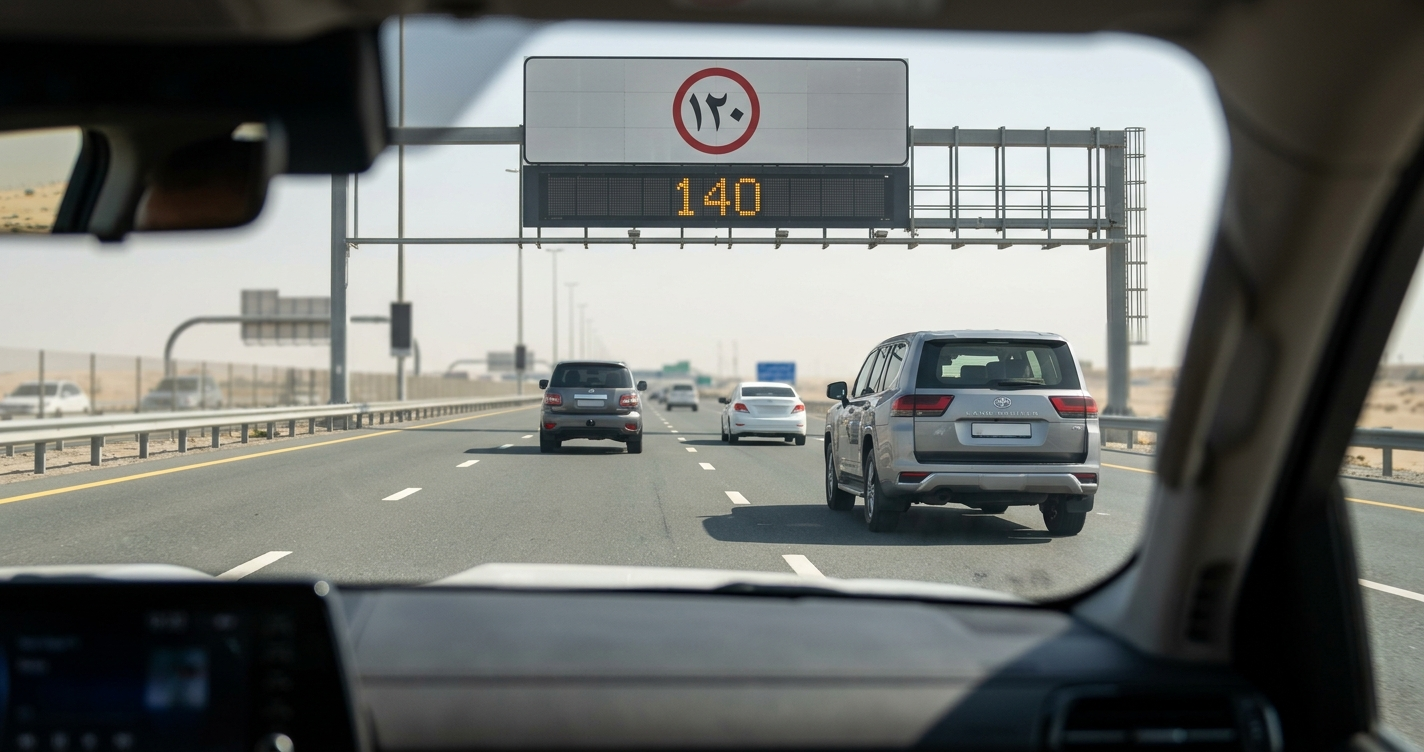
Quick answer: The Dubai speed limit buffer is a 20 km/h margin on most roads: radars are generally set to flash above the posted limit plus 20 km/h (for example, 121 km/h on a 100 km/h road). Abu Dhabi removed its buffer in 2018, so its cameras flash at 1 km/h over the posted limit. Electronic signs can lower limits at any time.
Ask ten Dubai drivers about the speed buffer and you'll get ten slightly different answers. Some swear it's 20 km/h. Some say 21. A few are convinced it disappeared years ago.
Here's what's actually going on, and why the buffer is a safety margin, not a target.
If you're new to driving here, our UAE traffic rules for drivers handbook covers everything from lane discipline to licences. This article stays on one topic: speed.
What is the Dubai speed limit buffer?
The speed buffer (sometimes called the grace limit) is the gap between the number on the sign and the speed at which a fixed radar is set to trigger.
On most Dubai roads, that gap is 20 km/h. A road signed at 80 km/h typically has radars set to flash at 101 km/h. A road signed at 100 km/h flashes at 121 km/h.
That's where the "21" comes from. Radars trigger above limit + 20, so the first fineable speed is limit + 21.
Where the buffer doesn't protect you
Plenty of drivers get caught because they treat the buffer as guaranteed. It isn't.
-
Abu Dhabi. Abu Dhabi Police removed the buffer in August 2018. The posted limit is the radar limit. Cross the border on the E11 at Dubai speeds and you'll collect fines.
-
Variable speed limits. Electronic signs on roads like Emirates Road and Sheikh Mohammed bin Zayed Road can drop the limit during fog, rain or incidents. The buffer applies to the new limit, not the old one.
-
Mobile radars and police patrols. Officers can stop you for driving too fast for conditions, regardless of buffer.
-
School zones and residential streets. Limits of 40 km/h or lower leave little room, and pedestrian risk is high.
Typical speed limits on major Dubai roads
Limits change, so always follow the sign in front of you. This table reflects commonly published limits.
|
Road |
Posted limit (km/h) |
Typical radar setting (km/h) |
|
Sheikh Zayed Road (E11), most sections |
100–120 |
121–141 |
|
Emirates Road (E611) |
110–120 |
131–141 |
|
Sheikh Mohammed bin Zayed Road (E311) |
110 |
131 |
|
Al Khail Road (E44) |
100 |
121 |
|
Dubai–Al Ain Road (E66) |
100–120 |
121–141 |
|
Residential/community roads |
40–60 |
Varies |
Minimum speed rules
Speed limits don't only run one way. Some UAE highways set minimum speeds in fast lanes, and driving well below the flow is itself dangerous.
Abu Dhabi introduced a 120 km/h minimum in the two left lanes of Sheikh Mohammed bin Rashid Road (E311) in 2023, then removed it in April 2025. Rules like this change, which is exactly why you should watch the overhead signs rather than relying on memory.
Speeding in a rental car: what happens?
The fine is linked to the car's plate, so the rental company receives it first. Rental agreements pass the fine on to the driver, usually with an admin fee. If the car is impounded, you may also pay impound and daily charges, plus loss of use.
Need a short-term car for a weekend drive? Our daily rental cars in Dubai come with clear terms on how fines are handled, so there are no surprises when the statement arrives.
Speeding fines in the UAE (2026)
Fines scale with how far over the limit you're travelling. These are commonly published federal figures.
|
Speed over the limit |
Fine |
Black points |
Impound |
|
Up to 20 km/h |
AED 300 |
0 |
No |
|
Up to 30 km/h |
AED 600 |
0 |
No |
|
Up to 40 km/h |
AED 700 |
0 |
No |
|
Up to 50 km/h |
AED 1,000 |
0 |
No |
|
Up to 60 km/h |
AED 1,500 |
6 |
15 days |
|
More than 60 km/h |
AED 2,000 |
12 |
30 days |
|
More than 80 km/h |
AED 3,000 |
23 |
60 days |
The jump at 60 km/h over is the one that matters. That's where black points and vehicle impoundment kick in. Our guide to black points in the UAE explains how those points add up (publishing 10 October).
Practical habits that keep you fine-free
Set cruise control to the posted limit, not the buffer. On a 120 km/h road, cruising at 120 leaves you 20 km/h of error margin when you overtake or descend a slope.
Use a navigation app that shows live speed limits and camera alerts. And when you cross into Abu Dhabi, drop your mental buffer to zero.
Key takeaways
-
Dubai's buffer is generally 20 km/h; radars flash from limit + 21.
-
Abu Dhabi has no buffer since 2018.
-
Variable signs override fixed limits, and the buffer applies to the lowered limit.
-
Fines jump sharply above 60 km/h over, with black points and impoundment.
Sources: Dubai Police and Abu Dhabi Police published speed policies; UAE Federal Traffic Law fine schedule. Verify current figures with the MOI in the week of publishing. Last updated: 3 October 2026.


FAQ
Frequently Asked Questions
Frequently asked questions about this article.

Need more help?
Contact us